
Can NSAIDs Affect Sperm and Egg Health? What the Research Really Shows
By Dr. Rosia Parrish, ND
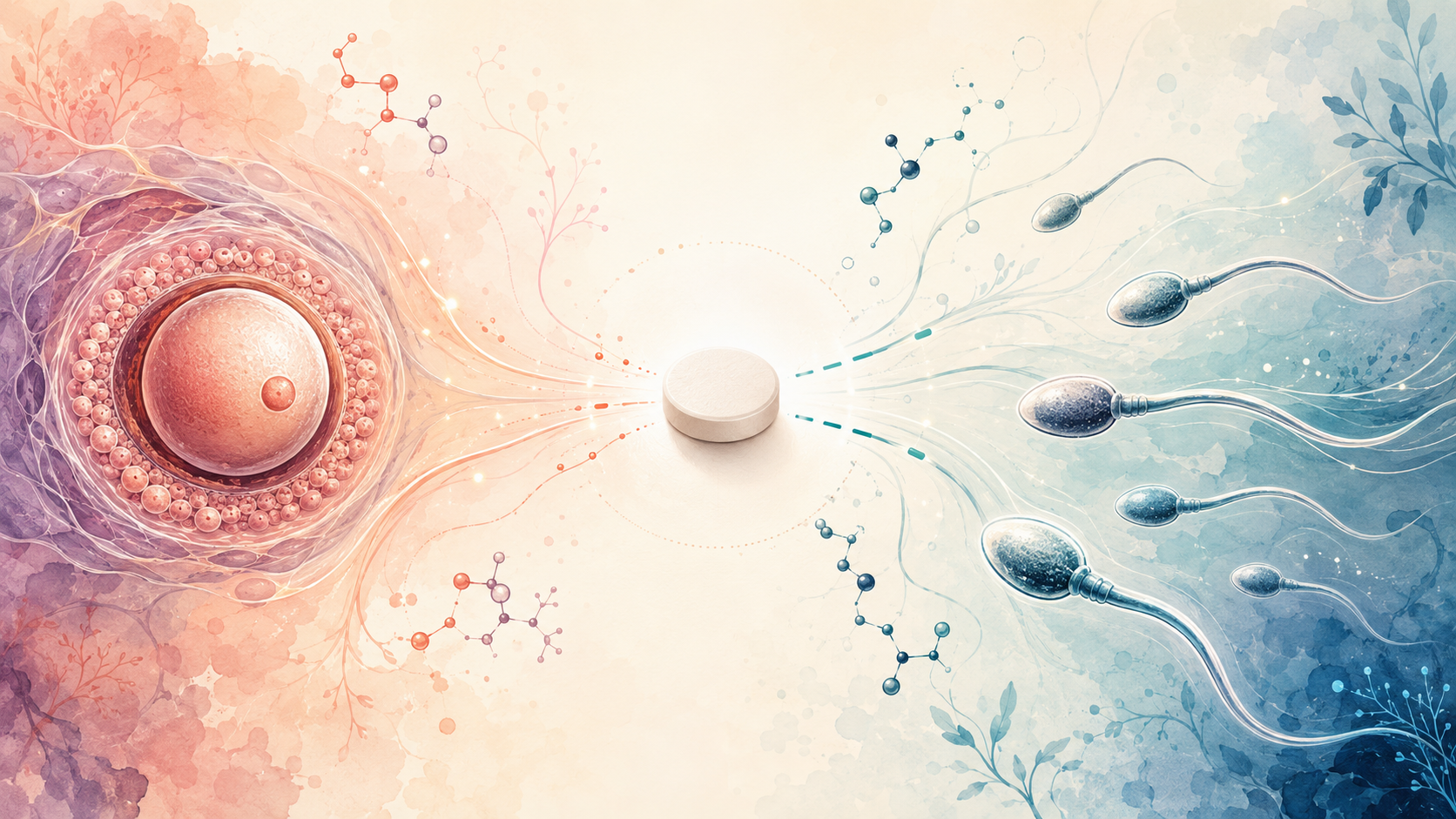
Ibuprofen for a headache. Naproxen for menstrual cramps. Diclofenac for an injury. Celecoxib for arthritis. Nonsteroidal anti-inflammatory drugs, or NSAIDs, are so familiar that it is easy to forget how biologically active they are.
For most people, occasional NSAID use is unlikely to be the deciding factor in whether conception occurs. Yet NSAIDs act on prostaglandins, signaling molecules that are involved not only in pain and inflammation, but also in ovulation, implantation, testicular hormone production, and sperm function. That makes the fertility question reasonable, especially when these medications are taken at higher doses, for many days, or during a hormonally sensitive window.
The most accurate conclusion is neither “NSAIDs are harmless” nor “NSAIDs cause infertility.” The evidence is more specific:
NSAIDs can temporarily influence reproductive physiology. The clearest human evidence involves delayed follicular rupture around ovulation and altered testicular hormone signaling with sustained high-dose ibuprofen. Direct, permanent damage to adult eggs or sperm has not been established.
That distinction matters. It allows us to make thoughtful decisions without turning a useful medication into a source of fear.
First, what counts as an NSAID?
Common NSAIDs include:
ibuprofen
naproxen
aspirin
diclofenac
indomethacin
meloxicam
celecoxib and other selective COX-2 inhibitors
Acetaminophen, also called paracetamol, is a pain reliever and fever reducer, but it is not an NSAID. Its reproductive evidence and safety profile are different, so it should not be treated as an automatically interchangeable alternative.
Low-dose aspirin also deserves its own category. An 81 mg aspirin regimen prescribed for a specific fertility, cardiovascular, or pregnancy indication is not biologically equivalent to taking full anti-inflammatory doses of aspirin, ibuprofen, or naproxen. Do not stop prescribed low-dose aspirin based on a general discussion of NSAIDs.
Why would an anti-inflammatory drug affect fertility?
NSAIDs inhibit cyclooxygenase enzymes, commonly called COX-1 and COX-2. These enzymes help the body produce prostaglandins.
Lowering prostaglandins can reduce pain, swelling, fever, and menstrual cramping. But prostaglandins are not simply “bad inflammation.” They also serve as short-range messengers that help coordinate normal reproductive events.
In the ovary, the luteinizing hormone surge increases COX-2 activity and prostaglandin production inside the dominant follicle. This supports cumulus expansion, tissue remodeling, and rupture of the follicular wall so the oocyte can be released. Ovulation is, in part, a carefully regulated inflammatory-like event.
In the testes and male reproductive tract, prostaglandin and endocrine pathways interact with Leydig cells, which produce testosterone, Sertoli cells, which support developing sperm, and the environment through which sperm mature. Blocking COX signaling therefore has plausible reproductive effects, although a plausible mechanism is not the same as proof of clinical infertility.
What NSAIDs may do to ovulation and egg health
1. They can delay or prevent follicular rupture
This is the clearest female fertility signal.
Several small clinical studies have found that NSAIDs taken close to ovulation can delay rupture of the dominant follicle. In some cases, the follicle luteinizes but does not release the egg, a pattern called luteinized unruptured follicle syndrome, or LUF.
A 2024 prospective controlled study used hCG to trigger ovulation and compared women who took 400 mg of ibuprofen every eight hours with controls. At 42 hours after the trigger, delayed ovulation was much more common in the ibuprofen group. This does not show that a single routine dose prevents conception. It does show that repeated dosing during the narrow periovulatory window can meaningfully alter the timing of follicular rupture.
Selective COX-2 inhibitors and certain longer-acting NSAIDs have also delayed or inhibited ovulation in small studies. In fact, fertility clinics sometimes use an NSAID intentionally in natural or minimally stimulated IVF cycles to reduce the chance of premature ovulation before egg retrieval. The same mechanism can be helpful or unhelpful depending on the clinical goal.
2. Delayed ovulation is not the same as a damaged egg
Headlines often blur these outcomes, but they are different questions.
Human evidence that common NSAID use directly damages adult oocytes or depletes ovarian reserve is limited. There is no good evidence that an occasional dose of ibuprofen lowers AMH, reduces the primordial follicle pool, or permanently “ages” eggs.
One observational study of 111 natural-cycle IVF patients compared women exposed to short-term ibuprofen with unexposed women. The rates of mature oocytes and implantation did not differ, and ibuprofen exposure was not significantly associated with embryo quality. Because the study was not randomized and was conducted in a specialized IVF setting, it cannot prove complete safety. Still, it is an important counterweight to the idea that periovulatory ibuprofen automatically ruins egg quality.
Animal studies and laboratory models suggest that strong or prolonged suppression of COX-2 can interfere with oocyte maturation and fertilization. These findings identify a biologically sensitive pathway, but they should not be translated directly into claims of permanent egg damage in adult women using standard doses.
3. Time-to-pregnancy data are mixed
In a prospective North American cohort, preconception naproxen use was associated with lower fecundability, including a dose-response pattern. Ibuprofen and aspirin use were not appreciably associated with time to pregnancy. The authors also emphasized a major limitation: people taking naproxen may have had more severe menstrual pain, endometriosis, inflammation, or another condition that itself affects fertility. This is called confounding by indication.
In other words, the medication may be part of the picture without being the entire explanation.
4. Low-dose aspirin is a separate conversation
In a randomized trial involving more than 1,200 women with one or two prior pregnancy losses, daily 81 mg aspirin did not significantly increase anovulation. Low-dose aspirin may be prescribed in selected fertility and pregnancy settings for vascular or inflammatory reasons. It should not be grouped casually with full-dose NSAID use around ovulation.
What NSAIDs may do to sperm and male reproductive hormones
The male evidence is more mixed than many online summaries suggest.
1. Sustained high-dose ibuprofen can change testicular hormone signaling
In a small randomized controlled trial, 31 healthy men ages 18 to 35 received ibuprofen or placebo. The ibuprofen regimen was 600 mg twice daily for up to six weeks, a total of 1,200 mg per day.
Men taking ibuprofen developed higher luteinizing hormone relative to testosterone, along with changes in other testicular hormone ratios. Testosterone did not simply collapse. Instead, the pituitary appeared to send a stronger LH signal to maintain testosterone production, a pattern the researchers described as compensated hypogonadism.
The study is meaningful because it demonstrated a measurable endocrine response in humans. It was also small, short, and used sustained high-dose exposure. It did not prove that an occasional over-the-counter dose causes infertility, nor did it establish permanent impairment.
2. Hormonal changes do not always translate into worse semen parameters
Another study evaluated men with leukocytospermia who took 1,800 mg of ibuprofen daily for three weeks as part of treatment. Among the 51 men who returned for repeat testing, semen volume, concentration, motility, total motile count, and forward progression did not significantly worsen.
That study was retrospective, involved a specific clinical population, and repeated semen testing after only three weeks. It therefore cannot exclude effects that take longer to appear. Still, it shows why the human evidence cannot be summarized as “ibuprofen destroys sperm.”
A separate prospective preconception cohort of 1,956 men found that low-dose use of ibuprofen, naproxen, or aspirin was not notably associated with the couple’s chance of conception per cycle. By contrast, a 2025 nationwide retrospective study reported a higher diagnosis rate of male infertility among men with longer annual ibuprofen exposure, especially beyond 60 days. Database studies can identify important signals, but they cannot fully separate medication effects from the chronic pain, illness, fever, or inflammation that prompted medication use.
3. Laboratory and animal studies raise questions, not final answers
Reviews of laboratory and animal research report changes in sperm motility, viability, count, DNA integrity, oxidative balance, or testicular tissue after ibuprofen and other NSAID exposure. Directly exposing sperm to a drug in a dish, or administering proportionally high doses to an animal, is not equivalent to a person taking a standard tablet.
These studies are useful for identifying possible mechanisms. They are not enough to diagnose NSAID-induced infertility in an individual.
4. The underlying reason for taking an NSAID matters
Fever can temporarily reduce sperm count, motility, and DNA quality. Autoimmune disease, chronic inflammation, injury, poor sleep, and severe pain can also alter reproductive hormones or sexual function.
If a man takes ibuprofen for a high fever and has a poor semen analysis two months later, the fever may be a larger factor than the medication. If he takes high-dose NSAIDs most days for chronic pain, the exposure deserves a more careful review. Context is essential.
A practical evidence snapshot
QuestionWhat the human evidence currently supportsCan NSAIDs delay ovulation?Yes. Repeated dosing near ovulation can delay follicular rupture, particularly with some COX-2 inhibitors and higher or sustained dosing.Do NSAIDs permanently damage eggs?Not established. The strongest adult human evidence concerns ovulation timing, not depletion of ovarian reserve or permanent oocyte damage.Do NSAIDs lower AMH?There is not enough evidence to use routine NSAID exposure as an explanation for a low AMH result.Can ibuprofen alter male hormones?Yes. A small trial found compensated testicular endocrine changes during sustained high-dose use.Do NSAIDs reduce sperm count or motility in humans?The evidence is inconsistent. Short-term studies and low-dose preconception data are reassuring, while laboratory, animal, and emerging long-duration observational data raise concern.Is occasional use likely to cause infertility?There is no convincing evidence that occasional standard-dose use causes permanent infertility in otherwise healthy adults.Is low-dose aspirin the same as other NSAID exposure?No. It has different dosing, COX selectivity, and clinical indications. Do not discontinue it without the prescribing clinician.
Who may want a closer medication review?
An NSAID review is especially reasonable when:
a woman is tracking ovulation and takes repeated NSAID doses during the fertile window
ovulation appears delayed or a dominant follicle repeatedly fails to rupture
a couple has unexplained infertility or a longer-than-expected time to pregnancy
a man has an abnormal semen analysis or altered testosterone, LH, FSH, or inhibin B patterns
either partner uses high-dose NSAIDs frequently or for weeks to months
chronic pain, endometriosis, inflammatory arthritis, migraine, or autoimmune disease is present
a fertility clinic has provided medication-specific instructions for an IUI, IVF, or egg-retrieval cycle
This is a review, not an automatic stop order. Inflammatory diseases also affect fertility, and adequately treating the underlying condition may be more beneficial than discontinuing a medication without a workable alternative.
How to support sperm and egg health without undertreating pain
1. Map the actual exposure
Write down the generic medication name, dose, number of doses per day, number of days per month, timing within the menstrual cycle, and reason for use. Combination cold, flu, migraine, sleep, and menstrual products may contain an NSAID even when the front label emphasizes another ingredient.
“I take ibuprofen sometimes” is difficult to assess. “I take 600 mg three times daily for four days around every LH surge” is actionable information.
2. Discuss the fertile window, not just the medication
For a woman trying to conceive naturally, ask the treating clinician whether NSAID use can be minimized during the several days surrounding the LH surge and expected ovulation. This is most relevant with repeated dosing, not a reason to panic over a single tablet already taken.
During fertility treatment, follow the clinic’s instructions. An NSAID may be discouraged because follicular rupture is desired, or prescribed because premature rupture needs to be delayed.
3. Do not stop a medically necessary prescription on your own
Abruptly discontinuing treatment for arthritis, migraine, post-operative pain, or another inflammatory condition may worsen health and function. A prescriber or pharmacist can help compare options, timing, topical versus systemic treatment, and the lowest effective exposure consistent with safe care.
Acetaminophen is sometimes an option for pain or fever, but it does not treat inflammation in the same way and is not appropriate for everyone. Excess dosing can cause severe liver injury. Substitutions should be individualized.
4. Treat the source of repeated pain
Frequent pain deserves evaluation rather than endless symptom suppression. Depending on the cause, a plan might include physical therapy, rehabilitation, ergonomic changes, migraine prevention, sleep support, heat or cold, pelvic-floor therapy, treatment of endometriosis, dental care, or better control of an inflammatory disease.
These strategies are not interchangeable, and they will not eliminate every need for medication. Their value is reducing unnecessary repeated exposure while improving the condition that prompted it.
5. Allow enough time to reassess sperm
If a clinician recommends reducing or changing chronic NSAID use in a man with abnormal semen parameters, improvement would not necessarily appear immediately. Sperm development and transport take roughly two and a half to three months. A repeat semen analysis is often more informative after that interval than after only a few days.
If the concern includes endocrine function, a clinician may consider total testosterone, LH, FSH, prolactin, estradiol, and sometimes inhibin B based on symptoms and the semen analysis. These tests require context; one isolated value rarely tells the full story.
A separate pregnancy safety note
Once pregnancy occurs, the medication conversation changes. The U.S. Food and Drug Administration advises avoiding NSAIDs at about 20 weeks of pregnancy or later unless specifically directed by a healthcare professional because they can cause fetal kidney dysfunction and low amniotic fluid. Around 30 weeks and later, NSAIDs also raise concern for premature closure of the fetal ductus arteriosus.
This warning does not apply to prescribed low-dose aspirin used for certain pregnancy indications. Anyone who is pregnant, may be pregnant, or is undergoing an embryo transfer should review pain and cold medications with a clinician or pharmacist.
The bottom line
NSAIDs can affect reproductive biology, but the effect depends on the drug, dose, duration, timing, and reason for use.
For eggs, the best human evidence points to a potentially reversible change in ovulation timing or follicular rupture, not proven depletion of ovarian reserve. For sperm, sustained high-dose ibuprofen can alter testicular hormone signaling, while studies of semen quality and natural conception remain mixed. Occasional use has not been shown to cause permanent infertility.
The goal is not fear or blanket avoidance. It is precision: use medication when its benefits are meaningful, avoid unnecessary or prolonged exposure, pay attention to the fertile window, and investigate the pain or inflammation that made the medication necessary in the first place.
References
von Wolff M, et al. Ibuprofen delays ovulation by several hours: prospective controlled study in natural cycles with HCG-triggered ovulation. Reproductive BioMedicine Online. 2024.
Kohl Schwartz AS, et al. Short-term application of ibuprofen before ovulation. Facts, Views & Vision in ObGyn. 2020.
Uhler ML, et al. The effect of nonsteroidal anti-inflammatory drugs on ovulation: a prospective, randomized clinical trial. Fertility and Sterility. 2001.
McInerney KA, et al. Preconception use of pain-relievers and time-to-pregnancy: a prospective cohort study. Human Reproduction. 2017.
Radin RG, et al. Low-dose aspirin and sporadic anovulation in the EAGeR randomized trial. Journal of Clinical Endocrinology & Metabolism. 2017.
Kristensen DM, et al. Ibuprofen alters human testicular physiology to produce a state of compensated hypogonadism. Proceedings of the National Academy of Sciences. 2018.
Kavoussi PK, et al. Ibuprofen does not have an adverse impact on semen parameters. Journal of Assisted Reproduction and Genetics. 2018.
Wesselink AK, et al. Association between male use of pain medication and fecundability. American Journal of Epidemiology. 2020.
Banihani SA. Effect of ibuprofen on semen quality. Andrologia. 2019.
Huang WT, et al. Ibuprofen use and male infertility: insights from a nationwide retrospective cohort study. European Journal of Obstetrics & Gynecology and Reproductive Biology. 2025.
U.S. Food and Drug Administration. FDA recommends avoiding NSAID use in pregnancy at 20 weeks or later. Updated 2022.
Medical disclaimer: This article is for educational purposes and is not a substitute for individualized medical care. Do not start, stop, or change a prescription or over-the-counter medication without discussing your circumstances with a qualified healthcare professional.